
Follow your doctor’s instructions and consult with them before changing your diet, exercise routine, or supplements.
Strength, speed, and stamina are just a few of the physical abilities that naturally diminish as we age. Together with these changes in muscle function, the body’s capacity to coordinate its movements changes. Decreases in physical strength change the way you interact with the world as you age – they increase the likelihood that as you become older, you won’t be able to do activities like walking around the garden, bringing groceries inside, keeping your balance on a slick surface, or playing catch with your grandkids as well as you once could. But do these efforts really need to deteriorate? Let’s look at why this happens and what you can do to actually develop your muscles and synchronize your motions.
Why Being Active is Important
One of the most important things you can do for your health as an older adult is to engage in regular physical activity. Many age-related health disorders can be avoided or postponed by staying active and maintaining your strength, allowing you to carry out everyday duties independently. Physically active seniors can experience many benefits, including:
- Making activities of daily living much easier
- Reducing risk for falls and resulting injuries
- Helping control arthritis pain and joint swelling
- Lowering the risk of dementia
- Reducing anxiety and depression
- Improving mood and increasing socialization
- Improving physical function in frail adults
How Much Physical Activity is Appropriate?
Those who know the great benefits of exercise may be inspired to set goals, but make sure to follow recommended guidelines and instructions from your medical professional first.
If you are new to working out, it’s best to start slow. Older adults who have been sedentary should begin exercising in short intervals of 5 to 10 minutes and build up gradually, per the CDC. Sitting less and doing any amount of moderate to vigorous exercise will bring some health benefits.
Older adults seeking substantial benefits should do 2.5 to 5 hours of moderate-intensity aerobic activity or one hour and 15 minutes to 2.5 hours of vigorous-intensity aerobic activity—or a combination of the two- throughout the week, according to the DHHS.
What Activities to Focus On
As for what exercise to do, there’s no one size fits all program—and that makes planning exciting. Start a plan that you’re enthusiastic to try.
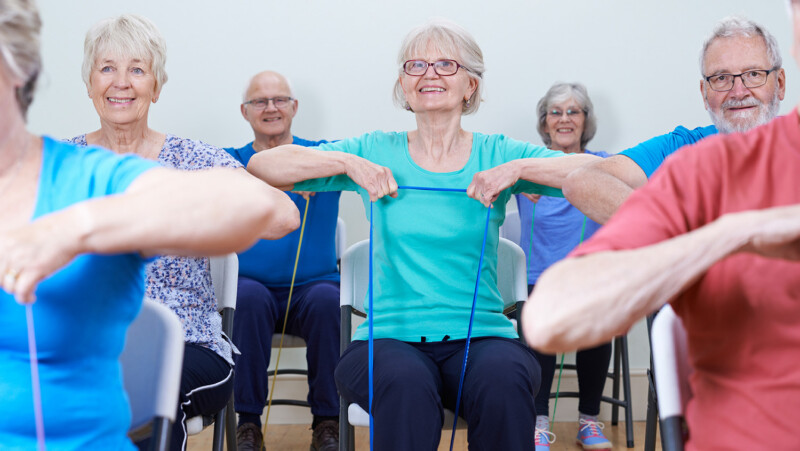
Seniors ought to focus on aerobic activity (like walking, dancing, stationary bike riding, tennis, etc.) at least three days a week. Muscle strengthening (like using bands, hand held weights, or gardening with digging and lifting, etc.) should be done at least two days a week. A session of aerobic, strength, and balance work (like walking heel to toe or standing from sitting) is a great way to improve physical function.
Those with limited mobility can benefit greatly from chair exercises (like knee raises, arm lifts, and calf raises). Chair yoga is another wonderful exercise option. It has low impact on joints but increases balance and flexibility. Also, Tai chi, which combines gentle movements and controlled breathing, can be great for strength building and balance. It can be done with modifications, while still being impactful. Using a stability ball is another way to make a workout gentler, but still effective for strength building. If you want to try these workouts with other seniors, consider checking out your local senior center or a local senior living community, where these classes are often held daily.
We hope this article is helpful for your personal health journey. Let us know your fitness goals on our Facebook Page!
Frequently Asked Questions about Staying Active as You Age
1. Why is physical activity so important for older adults?
Staying active helps maintain strength, balance, and coordination—key factors for independent living. It can also reduce the risk of falls, improve mood, ease joint pain from arthritis, and even help prevent cognitive decline.
2. How much exercise should I aim for each week?
Most older adults benefit from 2.5 to 5 hours of moderate activity (like brisk walking or gardening) or 1 to 2.5 hours of vigorous activity (like tennis or aerobics) weekly. Always start slowly and build up your routine as your comfort and stamina increase.
3. What kinds of exercises are best for seniors?
A balanced fitness plan includes a mix of:
-
Aerobic activity for heart and lung health (walking, dancing, or cycling).
-
Strength training for muscles and joints (light weights, resistance bands, or yard work).
-
Balance and flexibility exercises (Tai chi, yoga, or simple heel-to-toe walking).
4. What if I have limited mobility or joint pain?
Chair exercises, chair yoga, or water aerobics are great options that are gentle on joints. Tai chi or stability ball exercises can also help improve strength and coordination at a comfortable pace.
5. Should I talk to my doctor before starting an exercise program?
Yes—always consult your doctor before making changes to your exercise routine, diet, or supplements. They can help you choose activities that fit your health needs and goals.